Murata SCH1633-D01 Sets a New Standard for Automotive 6DoF Sensor

Release time:2024-11-12
author:AMEYA360
source:Murata
reading:2448

  Murata is expanding its range of innovative Six Degrees-of-Freedom devices with the introduction of the SCH1633-D01. The micro-electromechanical system (MEMS) based sensor moves the benchmark for performance, system integration, and total cost optimization. It is designed for various automotive applications, including autonomous driving (AD), advanced driver-assistance systems (ADAS), inertial navigation, vehicle stability control, and camera or headlight alignment.
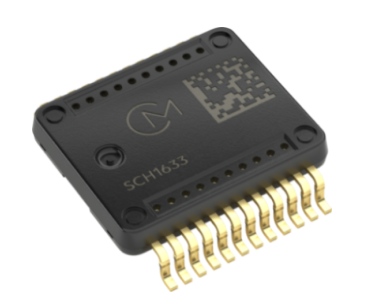
Murata SCH1633-D01 Sets a New Standard for Automotive 6DoF Sensor

  Market Demands

  With the increasing push for vehicle autonomy and safety, there is an unquestionable demand for extremely accurate sensors with comprehensive built-in safety features and a high level of integration. Likewise, complying with technical regulations like the UNECE’s headlight leveling regulation requires accurate and cost-optimized solutions – something the SCH1633-D01 has demonstrated it can achieve.

  The SCH1633-D01 is a single-package solution optimized for zonal architecture where all required subsystems, like GNSS integration, chassis control, and vehicle attitude sensing (camera and headlight alignment) can utilize its measurements. It is targeted for deployment in the central vehicle inertia measuring unit (IMU) providing a high-quality signal for all subsystems within the vehicle even in the toughest environments. This integration helps to reduce system complexity and provides a much-needed opportunity for cost optimization.

  SCH1633-D01 Features

  SCH1633-D01 is packaged in a unique 24-pin SOIC housing and uses the SafeSPI 2.0 interface with an up to 20-bit data frame for an extremely smooth and high-resolution output. The component supports various system-level time synchronization features, ensuring that the SCH1633-D01’s output can be easily harnessed across the entire vehicle. Furthermore, the extensive self-diagnostics features utilize over 200 monitoring signals to ensure the output is always trustworthy.

  The SCH1633-D01 is designed to provide a high-quality output, even in harsh temperature conditions. It features AEC-Q100 grade 1 qualification to guarantee reliable use throughout the whole component lifetime and is ISO26262 compliant with ASIL-B+ rating (up to ASIL-D via system integration) for exceptional built-in safety.

  For further information on the product’s extensive functionality, please visit its detail page here.

  Murata’s Recent 6DoF MEMS Success

  Murata’s previous generation 6DoF MEMS solution has proven to be highly successful as over 90% of autonomous miles in California alone are driven with the sensor on board. The improvements in this next-generation 6DoF devices are based on customer feedback, and they have already gained global recognition.

  The industrial counterpart SCH16T-K01, launched in January this year, has won the first prize in the Industrial & Manufacturing category of the Sensors Converge fair’s “Best of Sensors Award” competition and the SCH1633-D01 preliminary sample feedback has been remarkably positive.

  A partner of Murata, Hexagon, has been using the SCH1633-D01 in their products. Gordon Heidinger, Segment Manager, Automotive and Safety-Critical Systems at Hexagon’s Autonomy & Positioning division, remarked, “

  The SCH1633-D01 is displaying exceptional performance for a single MEMS sensor. We're pleased to promote this sensor integrated with our positioning solution”.

  Murata has also successfully demonstrated that the UNECE headlight leveling regulation can be fulfilled with the SCH1633-D01 sensor in combination with a commercially available alignment algorithm. This is a significant leap towards cost-effective regulation compliance.

  “Automotive 6DoF applications are rapidly developing, with fierce competition among manufacturers to capture a share of the market. This product offers high performance, demanded by the latest systems, while also providing a much-needed cost-saving opportunity,” said Ville Nurmiainen, General Manager of Product management at Murata Electronics Oy. He continued, “The SCH1633-D01 will give both a technological and cost down advantage to OEMs choosing to utilize the product to its full potential and will help them to further drive automotive applications forward and create safer roads for us all.”

  Preliminary samples are available now. Mass production of this exciting new solution is planned for early 2025.

("Note: The information presented in this article is gathered from the internet and is provided as a reference for educational purposes. It does not signify the endorsement or standpoint of our website. If you find any content that violates copyright or intellectual property rights, please inform us for prompt removal.")

Online messageinquiry

reading
Murata begins mass production of seven automotive MLCCs with world-leading capacitance for their rated voltage and size
  Murata Manufacturing Co., Ltd has begun mass production of seven AEC-Q200-qualified multilayer ceramic capacitors (MLCCs) that achieve the world’s largest capacitance for a given rated voltage and size*, supporting stable operation of in-vehicle systems and greater design flexibility. Five parts in the GCM series are rated at 2.5-4 Vdc, targeting IC peripheral circuits in advanced driver assistance systems (ADAS) and autonomous driving (AD) applications. The remaining two MLCCs are rated at 25 Vdc for in-vehicle power line applications.  In recent years, as ADAS and AD technologies advance, the number and performance level of systems installed in vehicles have continued to increase. As a result, demand for higher capacitance low-voltage MLCCs used around ICs has grown to ensure stable operation. In addition, as the number of MLCCs mounted on PCBs increases, space constraints become the critical, limiting factor in design. At the same time, for medium-rated voltage MLCCs used in automotive power lines, there is a rising demand for both miniaturization and higher capacitance to improve power and mounting density. These needs are particularly pronounced in ADAS and AD systems, where IC peripheral circuits and power lines are both subject to significant voltage fluctuations, requiring further increases in capacitance and reductions in component size.  Leveraging its proprietary ceramic materials along with particle refinement and uniformity technologies, Murata introduces seven automotive MLCCs that achieve the world’s largest capacitance by rated voltage and size.  For low-rated voltage MLCCs, Murata has expanded its lineup of products with a capacitance of 100 µF or higher, achieving 100 µF in the 1206-inch (3.2 mm × 1.6 mm) size, which was previously available only in the larger 1210-inch (3.2 mm × 2.5 mm) size. This reduces PCB mounting area by approximately 36%. In addition, in the smallest automotive MLCC size of 0201-inch (0.6 mm × 0.3 mm), capacitance has been increased from the typical 1-2.2 µF. For medium-rated voltage MLCCs, Murata has achieved a capacitance of 1 µF in the 0402-inch (1.0 mm × 0.5 mm) size, which was previously realized in the larger 0603-inch (1.6 mm × 0.8 mm), reducing PCB mounting area by approximately 61%.  By combining this product lineup, Murata addresses a wide range of challenges in the automotive market, including higher capacitance requirements around ICs, severe PCB space constraints, and stabilization of power lines, thereby contributing to stable operation of entire systems and greater design flexibility. Furthermore, reducing the number of MLCCs required enables lower PCB material usage and reduced power consumption during manufacturing, helping to lessen the environmental impact.  In the low-voltage lineup, the 2.5 Vdc rated GCM035D70E225ME02 is available in the 0201-inch size (0.6 mm × 0.3 mm), and offers a capacitance of 2.2 µF, achieving the world’s largest capacitance for its rated voltage and size class. The 1206-inch size (3.2 mm × 1.6 mm) GCM31CD70E107ME36 is rated at 2.5 Vdc and provides 100 µF, the world’s highest capacitance in its class. The GCM035D70G225MEC2 is rated at 4 Vdc, available in the 0201-inch size (0.6 mm × 0.3 mm), and delivers 2.2 µF, also the world’s highest capacitance for this category. The GCM31CD70G107ME36 is rated at 4 Vdc, available in the 1206-inch size (3.2 mm × 1.6 mm), and offers 100 µF, achieving the world’s highest capacitance for this rated voltage and size. The GCM32ED70G227MEC4 is rated at 4 Vdc, available in the 1210-inch size (3.2 mm × 2.5 mm), and provides 220 µF, the world’s largest capacitance in this class.  The medium-rated voltage lineup has two part numbers designed for power line applications. The GCM155D71E105KE36 is rated at 25 Vdc, available in the 0402-inch size (1.0 mm × 0.5 mm), and offers 1 µF, achieving the world’s highest capacitance for this rated voltage and size. Also rated at 25 Vdc, the GCM31CC71E226ME36 is available in the 1206-inch size (3.2 mm × 1.6 mm), and provides 22 µF, also the world’s highest capacitance in its class.  Murata has long focused on the development of automotive MLCCs and has delivered a wide range of products that demonstrate excellent performance across applications from IC peripheral circuits to powertrain and safety systems. Going forward, Murata will continue to contribute to higher performance and increased functionality of cars through ongoing product development that responds to evolving market needs.
2026-04-24 10:39 reading:269
Murata launches vibration sensor device for predictive maintenance capable of detecting high-frequency range up to 20 kHz
  Murata Manufacturing Co., Ltd. announces the SMD-type vibration sensor device PKGM-210D-R. Mass production has already begun.  In the factory automation (FA) industry, maintenance has traditionally consisted of scheduled maintenance at fixed intervals and corrective maintenance after failures.  In recent years, however, predictive maintenance, which detects early signs of failure to prevent unexpected equipment stoppages, has become increasingly important. In rotary machinery such as bearings and motors, component damage or insufficient lubrication generates minute abnormal vibrations in the high-frequency range up to 20 kHz before failures become serious. Measuring such high-frequency vibrations is challenging due to interference from noise, and detection has often relied on the experience of skilled technicians using auditory inspection.  By combining its long-established piezoelectric ceramic vibration detection technology with advanced circuit packaging expertise, Murata has developed the PKGM-210D-R, capable of detecting vibrations up to 20 kHz, the upper limit of the audible range. This enables detection of subtle high-frequency abnormal vibrations that were previously identified only by human hearing.  The product supports early prediction of equipment issues, helping to reduce downtime, optimize maintenance timing, extend component life, and minimize excess inventory. In addition, its compact size of 0.20 × 0.20 × 0.14 inches (5.0 × 5.0 × 3.5 mm) allows easy retrofitting to existing equipment or direct integration into motor components.  Key features:  Z-axis direction detection up to 20 kHz  Compact size (0.20 × 0.20 × 0.14 inch / 5.0 × 5.0 × 3.5 mm) for easy retrofit and built-in mounting  Built-in driver and filter circuits  Versatile single analog output  Built-in temperature sensor
2026-03-19 17:06 reading:527
Murata:SCH16T-K20 High-Precision 6-Axis IMU for Robotics and Camera Systems
  Murata Manufacturing Co., Ltd. has announced the expansion of its SCH16T series of high-performance inertial measurement units (IMUs) with the introduction of the SCH16T-K20, targeting industrial, prosumer, and consumer markets worldwide. Designed for OEMs in robotics, drones, and camera systems, as well as IMU module manufacturers and system integrators requiring safety-critical IMUs, the SCH16T-K20 delivers market-leading precision, mechanical robustness, and reliability.  In demanding inertial measurement applications such as dead-reckoning navigation as well as drone and camera stabilization, small measurement errors can accumulate over time leading to unpredictable measurement results. In these applications, key IMU parameters such as noise density, offset bias drift, and vibration rectification ultimately limit the end-application performance and achievable response speed. Murata improves all the key areas with the new SCH16T-K20, which features a brand-new MEMS accelerometer and improved gyroscope temperature calibration.  The SCH16T-K20 is a 6 axis IMU with a typical gyroscope noise density of 0.0004 (°/s)/√Hz, gyroscope bias instability of 0.3 °/h, and accelerometer noise density as low as 33 µg/√Hz. Like all other SCH16T products, the SCH16T-K20 has a wide operating temperature range from -40 °C to +110 °C, a supply voltage of 3.0–3.6 V, and I/O voltage of 1.7–3.6 V, and a compact size of 0.46 × 0.53 × 0.11 inch (11.8 × 13.4 × 2.9 mm).  The driver behind the SCH16T-K20 accelerometer performance improvement is the brand-new accelerometer MEMS based on Murata’s proven 3D MEMS technology. The new MEMS uses a double-differential measurement principle, familiar from current SCA3400 and legacy SCA103T series sensors. The double differential measurement enables SCH16T-K20’s market leading low noise density, as well as thermal and lifetime stability.  The SCH16T-K20 also includes an enhanced version of the market-leading low-noise SCH16T gyroscope, now tuned specifically for the -40 °C to +85 °C temperature range to enable low offset bias shift across that range. All SCH16T series products are carefully validated with a test set based on AEC-Q100 operating temperature Grade 1 (-40 °C to +125 °C) standards*, ensuring reliable operation over a wide temperature window. The series sensors include market-leading self-diagnostic features, making them suitable for safety-critical applications. Murata’s unique MEMS stands out in the competitive IMU market for its exceptional mechanical resilience to shocks and vibration rectification. The series’ robust design and reliability contribute to longer device lifespans and reduced waste.  The SCH16T-K20 becomes the highest-performing variant in the SCH16T lineup while maintaining pin-to-pin and software compatibility. This compatibility makes integration of different SCH16T variants easy for OEMs and module designers. Mass production of the SCH16T-K20 is scheduled to begin in the first half of 2026. Murata will continue developing sensor solutions aligned with evolving market demands, contributing to safer, more sustainable, and higher-performing technologies across industrial and consumer markets.
2025-12-26 16:09 reading:1226
Murata Launches World’s First Inner Cavity-Structure Ultra-Low-Loss LCP Flexible Substrate, Achieving Dk below 2.0, Contributing to 6G Realization
  Murata Manufacturing Co., Ltd announces the World’s First LCP (liquid crystal polymer) flexible substrate with an Inner Cavity structure, ULTICIRC, and has already begun mass production*. Murata’s proprietary design incorporates an Inner Cavity within the substrate to achieve a dielectric constant (Dk) below 2.0, dramatically reducing transmission loss.Cross-Section Image  With 6G expected to leverage the FR3 (Frequency Range 3) band—roughly 7–24 GHz—substrates with minimal transmission loss are essential to enable high-speed, high-capacity communications at high frequencies. At the same time, demand is growing for thin, space-saving flexible substrates that support free-form mechanical design to meet the ongoing miniaturization of smartphones and communication equipment. Murata has provided LCP flexible substrates with excellent high-frequency characteristics, featuring a proprietary high-performance resin that eliminates spring-back and an adhesive-free, one-shot press multilayer lamination process; building on this expertise for 6G readiness, Murata has developed and launched ULTICIRC. Conventional flexible substrates faced the challenge that making them thinner resulted in increased transmission loss, but this product incorporates an Inner Cavity structure within the substrate, achieving a dielectric constant (Dk) below 2.0, which is significantly lower than Murata's conventional products, enabling both thin profiles and ultra-low transmission loss simultaneously.  Furthermore, thanks to an adhesive-free proprietary manufacturing method and the excellent barrier properties of LCP, the Inner Cavity structure maintains high moisture resistance.  For inquiries regarding this product, please contact us.
2025-12-18 16:00 reading:795
  • Week of hot material
  • Material in short supply seckilling
model brand Quote
TL431ACLPR Texas Instruments
BD71847AMWV-E2 ROHM Semiconductor
RB751G-40T2R ROHM Semiconductor
MC33074DR2G onsemi
CDZVT2R20B ROHM Semiconductor
model brand To snap up
STM32F429IGT6 STMicroelectronics
BU33JA2MNVX-CTL ROHM Semiconductor
IPZ40N04S5L4R8ATMA1 Infineon Technologies
TPS63050YFFR Texas Instruments
BP3621 ROHM Semiconductor
ESR03EZPJ151 ROHM Semiconductor
Hot labels
ROHM
IC
Averlogic
Intel
Samsung
IoT
AI
Sensor
Chip
About us

Qr code of ameya360 official account

Identify TWO-DIMENSIONAL code, you can pay attention to

AMEYA360 weixin Service Account AMEYA360 weixin Service Account
AMEYA360 mall (www.ameya360.com) was launched in 2011. Now there are more than 3,500 high-quality suppliers, including 6 million product model data, and more than 1 million component stocks for purchase. Products cover MCU+ memory + power chip +IGBT+MOS tube + op amp + RF Bluetooth + sensor + resistor capacitance inductor + connector and other fields. main business of platform covers spot sales of electronic components, BOM distribution and product supporting materials, providing one-stop purchasing and sales services for our customers.

Please enter the verification code in the image below:

verification code