Murata launches vibration sensor device for predictive maintenance capable of detecting high-frequency range up to 20 kHz
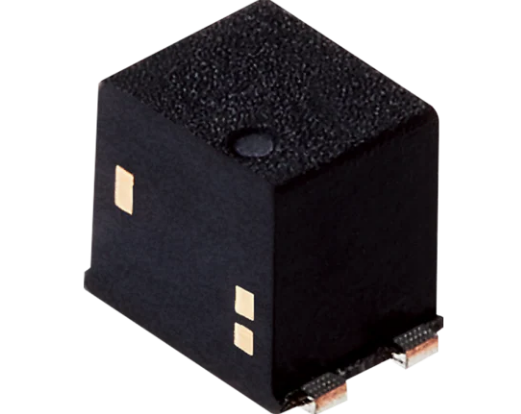
  Murata Manufacturing Co., Ltd. announces the SMD-type vibration sensor device PKGM-210D-R. Mass production has already begun.  In the factory automation (FA) industry, maintenance has traditionally consisted of scheduled maintenance at fixed intervals and corrective maintenance after failures.  In recent years, however, predictive maintenance, which detects early signs of failure to prevent unexpected equipment stoppages, has become increasingly important. In rotary machinery such as bearings and motors, component damage or insufficient lubrication generates minute abnormal vibrations in the high-frequency range up to 20 kHz before failures become serious. Measuring such high-frequency vibrations is challenging due to interference from noise, and detection has often relied on the experience of skilled technicians using auditory inspection.  By combining its long-established piezoelectric ceramic vibration detection technology with advanced circuit packaging expertise, Murata has developed the PKGM-210D-R, capable of detecting vibrations up to 20 kHz, the upper limit of the audible range. This enables detection of subtle high-frequency abnormal vibrations that were previously identified only by human hearing.  The product supports early prediction of equipment issues, helping to reduce downtime, optimize maintenance timing, extend component life, and minimize excess inventory. In addition, its compact size of 0.20 × 0.20 × 0.14 inches (5.0 × 5.0 × 3.5 mm) allows easy retrofitting to existing equipment or direct integration into motor components.  Key features:  Z-axis direction detection up to 20 kHz  Compact size (0.20 × 0.20 × 0.14 inch / 5.0 × 5.0 × 3.5 mm) for easy retrofit and built-in mounting  Built-in driver and filter circuits  Versatile single analog output  Built-in temperature sensor
Key word:
Release time:2026-03-19 17:06 reading:247 Continue reading>>
Renesas Develops SoC Technologies for Automotive Multi-Domain ECUs Essential for the SDV Era
  Renesas Electronics Corporation (TSE:6723), a premier supplier of advanced semiconductor solutions, has developed three System-on-Chip (SoC) technologies for automotive multi-domain electronic control units (ECUs). They feature advanced AI processing capabilities and chiplet functions, serving as the core technology platform for next-generation automotive electrical/electronic (E/E) architectures. Renesas presented the results at the International Solid-State Circuits Conference 2026 (ISSCC 2026), held February 15–19 in San Francisco, USA.  In the age of software-defined vehicles (SDVs), automotive SoCs require advanced performance to run multiple applications simultaneously and must offer scalability through chiplets. They must also meet the functional safety requirements of automotive SoCs. As multi-domain SoCs powering central computing are growing larger and more complex, maintaining automotive-grade quality is becoming more difficult. With increased performance in advanced SoCs, power consumption also rises, making improvements in power efficiency and safety vital. To meet these needs, Renesas has developed the following new technologies.  1. Chiplet architecture that supports functional safety  To meet the functional safety requirements of automotive SoCs, Renesas has developed a new, proprietary architecture that supports ASIL D even in a chiplet configuration. By combining the standard die-to-die UCIe interface with a proprietary RegionID mechanism, the architecture prevents interference with hardware resources, even when numerous applications run simultaneously, thereby achieving Freedom from Interference (FFI).  Conventional UCIe interfaces lack functionality to transmit RegionIDs between dies. Renesas developed a method for mapping RegionIDs into physical address space, encoding them into the UCIe region, and transmitting them. This enables safe access control through the memory management unit (MMU) and real-time cores, and meets functional safety requirements across chiplets. Additionally, by maintaining bandwidth from processors to the memory bus, the UCIe interface was confirmed through testing to achieve a high transmission speed of 51.2 GB/s, approaching the upper limit of intra-SoC transfer speeds. This technology provides both scalability and safety for high-performance automotive SoCs.  2. Advanced AI processing capabilities and automotive-grade quality  Automotive-grade quality is vital for SDV systems. Renesas has created a 3 nm SoC design that improves the performance of neural processing units (NPUs) for AI processing, while maintaining automotive-grade quality. In recent years, NPUs have been growing larger, with their area expanding 1.5-fold compared to previous generations. This has led to increased clock latency between shared clock sources and individual circuits. To address this problem, Renesas has redesigned the clock architecture by splitting up clock pulse generators (CPGs), which in past designs were module-level units, and placing mini-CPGs (mCPGs) at the sub-module level. This greatly reduces clock latency and meets timing requirements.  However, multi-layer mCPGs complicate test clock synchronization, which is critical for achieving zero defects in automotive applications. Renesas has integrated test circuits into the hierarchical CPG architecture and unified the signal path for user clocks and test clocks. The new design also synchronizes upper- and lower-level mCPGs under a single clock source in test mode. This makes unified phase adjustment possible. As a result, Renesas has been able to achieve quality aligned with zero-defect expectations, even for large-scale SoCs, providing the high reliability required for next-generation SDV automotive SoCs.  3. Advanced power control and monitoring for improved power efficiency and safety  To achieve the high level of performance required for automotive SoCs with improved power efficiency and safety, Renesas has developed advanced power gating technology that uses over 90 power domains. It enables precise power control, from several milliwatts to several tens of watts, depending on operating conditions. Furthermore, Renesas has split power switches (PSWs) into ring PSWs and row PSWs to reduce IR drops (voltage drops) associated with increasing current density from smaller process geometries. When power is turned on, the ring PSW suppresses rush currents. Then the row PSW equalizes impedance within the domain. Together, these reduce IR drops by roughly 13% compared with conventional designs.  To meet ASIL D functional safety standards, the dual core lock step (DCLS) configuration controls the master and checker cores with independent power switches and controllers. With this design, even if one side fails, the failure can be detected through lockstep operation. Furthermore, loopback monitoring is performed for each PSW's gate signal, so OFF states are detected when a failure occurs. A digital voltage meter (DVMON), which is highly resistant to temperature drift, is used for voltage monitoring. This improves aging tolerance by 1.4 mV. These technologies enable high-performance automotive SoCs that offer both power efficiency and safety.  These new technologies are being used in Renesas' R-Car X5H SoC for automotive multi-domain ECUs. With R-Car X5H, users can accelerate the evolution of SDVs while ensuring safety and enabling autonomous driving, digital cockpit and more.  About Renesas Electronics Corporation  Renesas Electronics Corporation (TSE: 6723) empowers a safer, smarter and more sustainable future where technology helps make our lives easier. A leading global provider of microcontrollers, Renesas combines our expertise in embedded processing, analog, power and connectivity to deliver complete semiconductor solutions. These Winning Combinations accelerate time to market for automotive, industrial, infrastructure and IoT applications, enabling billions of connected, intelligent devices that enhance the way people work and live. Learn more at renesas.com. Follow us on LinkedIn, Facebook, X, YouTube, and Instagram.  (Remarks) All names of products or services mentioned in this press release are trademarks or registered trademarks of their respective owners.
Key word:
Release time:2026-02-28 15:45 reading:407 Continue reading>>
NOVOSENSE and Inovance Automotive Co-Develop IC Solutions for Next-Generation Electric Drive Platforms
  NOVOSENSE Microelectronics announced that two highly integrated ICs—an isolated sensing IC and a logic ASC IC—developed in close collaboration with Inovance Automotive, a leading supplier of intelligent electric vehicle components and solutions, have entered mass production on Inovance Automotive’s next-generation electric drive (e-drive) platform. The customized IC solutions offer higher integration and optimized performance, supporting the ongoing shift toward more integrated electric drive systems while enabling designs that meet increasingly stringent functional safety requirements.  Conventional discrete electric drive designs rely on widely distributed components and complex wiring, often resulting in larger system size, higher power losses, slower response, and constrained reliability. As electric vehicles continue to demand longer driving range and higher output power, electric drive architectures are moving rapidly toward multi-in-one and highly integrated designs. In this context, semiconductor solutions must deliver greater functional integration while maintaining accuracy, reliability, and functional safety margins within limited space, without constraining system-level design flexibility.  Building on more than a decade of experience in motor controller system architectures and functional safety, Inovance Automotive proactively defined the key functional and performance requirements for the isolated sensing IC and logic ASC IC at an early stage of development. In response to these requirements, NOVOSENSE integrated high-voltage LDO, isolated sensing amplifier, and isolated comparator into a single isolated sensing IC. This integration significantly reduces external component while enabling high-precision isolated voltage sensing, fast OV/UV protection, and more compact electric drive designs.  The customized logic ASC IC further integrates multiple logic functions and supports frequency detection, enabling centralized handling of interface-related logic. This approach simplifies interface design, improves overall system integration, and supports more compact inverter layouts. At the same time, it helps reduce BOM cost and provides a solid foundation for optimizing functional safety architectures in electric drive and traction inverter systems.  By replacing mature discrete circuits with integrated IC solutions, the collaboration delivers clear system-level benefits.  Simplified architectures and fewer components reduce potential failure points and improve overall product robustness.  Higher integration lowers PCB area requirements, creating additional headroom for increased power density.  Standardized IC solutions also streamline development by reducing design and validation effort, helping shorten development cycles and accelerate time-to-market.  "Electric drive systems are entering a phase where higher integration is becoming essential, and progress at the chip level increasingly translates into system-level advantages," said Zheng Chao, Director of the R&D Center at Inovance Automotive. "This collaboration combines our strengths in electric drive systems with NOVOSENSE’s expertise in automotive semiconductors. More importantly, it reflects an important capability upgrade for Inovance Automotive—we are not only developing high-performance power electronics products, but also participating from the outset in defining system architectures and core chips. We look forward to continuing our work with NOVOSENSE to shape next-generation electric drive platforms and deliver more competitive system solutions to OEMs."  "NOVOSENSE and Inovance Automotive have established a strong foundation for collaboration," said Ye Jian, Product Line Director at NOVOSENSE. "This project demonstrates both our customer's confidence in our technology and our application-driven approach to innovation. By drawing on our long-standing expertise in isolation and interface technologies, we will continue to deliver high-precision, high-performance, and high-reliability IC solutions to support Inovance Automotive's next-generation electric drive platforms."  NOVOSENSE's Isolation+ portfolio covers digital isolator, isolated sensing, isolated driver, isolated power, and isolated interface, with cumulative shipments exceeding two billion units as of October 2025. The company also offers a broad automotive interface portfolio—including CAN, LIN, SerDes, logic ICs, and level shifters—providing customers with one-stop automotive-grade isolation and interface solutions. Across the new energy vehicle electrical system, NOVOSENSE works with hundreds of component suppliers, delivering semiconductor solutions for traction inverter, onboard charger (OBC), DC/DC converter, and battery management system (BMS), spanning sensor, signal chain, power management IC, and MCU.
Key word:
Release time:2026-02-25 17:36 reading:462 Continue reading>>
How Cat.1 bis Technology Solves the
  The Internet of Things (IoT) is entering its second phase — a shift from "multi-point connectivity" to "intelligent scenarios."  Traditional smart home devices are moving beyond indoor environments into outdoor spaces that lack stable power and network access. Asset tracking is expanding from localized monitoring to global roaming, while AI-powered wearables are pushing the limits of battery technology as computing demands rise.  To address these challenges, the global Cat.1 bis standard is emerging as a key enabler. With its streamlined integrated design, ultra-low microamp-level power consumption, and global single-SKU compatibility, Cat.1 bis provides a breakthrough solution for mobility and endurance in next-generation smart devices.  New Battlefield for IPCs: From "Fixed Sentries" to "Mobile Detectives"  IPCs (Internet Protocol Cameras) are evolving rapidly from traditional indoor home security systems toward mobile, portable, and multi-scenario applications. Users now demand outdoor devices that can operate in "off-grid, weak-network" environments and portable cameras capable of capturing "brilliant moments" anytime, anywhere.  However, once IPCs go outdoors, unstable networks and limited battery capacity become major constraints. How can video transmission remain stable during movement? How can a camera stay on standby 24/7 without missing key footage or draining the battery? These challenges set extremely high standards for module size, mobility, and power management.  To cope with fluctuating networks in mobile scenarios, the new-generation Cat.1 bis technology introduces bandwidth adaptation, which dynamically adjusts bitrate based on real-time signal quality. This significantly improves bandwidth utilization and ensures smooth video streaming even in weak network conditions.  Meanwhile, to tackle battery anxiety, smart detection and flexible recording technologies are being deployed. A Cat.1 module can stay connected while only triggering recording upon detecting anomalies or critical events. This "microamp standby, millisecond wake-up" mechanism captures every key moment while extending standby time exponentially.  Asset Tracking: Building a Truly Global Network  As global supply chains expand, goods increasingly travel across continents. Traditional tracking solutions require different hardware models for each country’s frequency bands — resulting in SKU fragmentation, higher R&D costs, and complex inventory management. Furthermore, to ensure covert installation and long operating time, devices must continuously shrink in size and reduce power consumption to near-physical limits.  The global Cat.1 bis module solves this through multi-region compatibility, enabling a single device to achieve "one hardware, worldwide connectivity." Enterprises can maintain a single SKU that meets network certification requirements across major global operators. This not only reduces management complexity and cost but also enables seamless roaming for cross-border asset tracking.  With its compact, integrated hardware design, the next-generation module minimizes PCB footprint to meet the "ultra-compact" demands of locators. Combined with software-level power optimization, standby consumption is reduced to the microamp level — allowing even coin cell–sized devices to deliver long-term asset protection.  AI Companions and Wearables: The Art of Balancing Performance and Efficiency  Driven by large AI models, new categories such as AI companion dolls and senior health trackers are booming. These devices embody the “have it all” dilemma — balancing the demanding requirements of AI voice interaction for speed and mobility access, cost efficiency for mass adoption, and large batteries within compact designs to support intensive AI operations. This transformation demands multi-functional connectivity.  Cat.1 bis perfectly meets the speed requirements for both voice interaction and data transmission, avoiding the overkill and high costs of advanced LTE modules. For AI-driven devices that frequently wake from standby, Cat.1 bis optimizes power consumption and sleep mechanisms at the software level, achieving an efficient balance between connectivity and computational efficiency. Its compact hardware design also makes wearables lighter and more comfortable, enabling truly all-day intelligent companionship.  Conclusion: The Core Enabler of the Next IoT Evolution  From mobile IPCs to globally connected trackers and long-lasting AI wearables, every leap in IoT devices pushes the limits of connectivity technology. The new-generation global Cat.1 bis is rising to the challenge with three core capabilities — high compatibility, cost efficiency, and intelligent adaptability (including bandwidth self-adjustment, smart sleep, and single-SKU global support).  Cat.1 bis not only achieves unprecedented compactness and power efficiency in hardware but also establishes a unified connectivity foundation for Chinese smart manufacturing to expand globally.
Key word:
Release time:2026-01-30 15:25 reading:481 Continue reading>>
ROHM’s New LDO Regulators with 500mA Output Current Achieving Stable Operation Even with Ultra-small Capacitors to Expand Design Flexibility for High-current Applications
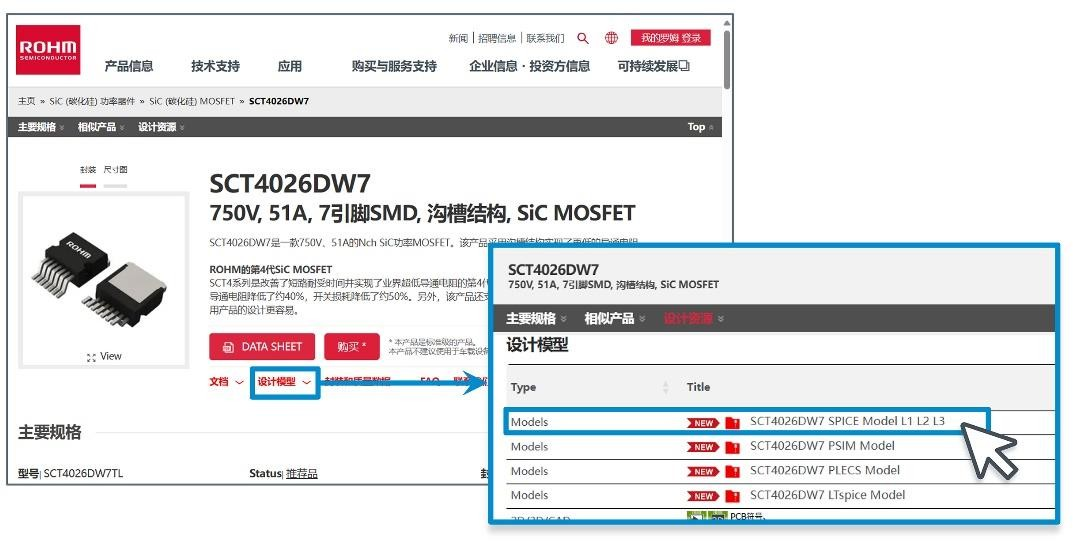
  ROHM has developed the “BD9xxN5 Series” of LDO regulator ICs with 500mA output current, featuring its proprietary ultra-stable control technology “Nano Cap™”. This series comprises 18 products designed for 12V/24V primary power supply applications used in automotive equipment, industrial equipment, and communication infrastructure.  In recent years, electronic devices have demanded higher density in smaller form factors at the same time. To meet this demand and achieve space savings and design flexibility, power supply ICs must be capable of stable operation even with small-capacity capacitors. However, achieving such performance with output capacitors of 1µF or less has been technically difficult.  To address this challenge, ROHM developed the “BD9xxN1 Series” LDO regulator (150mA output current) in 2022, incorporating its proprietary ultra-stable control technology, “Nano Cap™”. This innovation enables stable operation with output capacitors as small as 100nF, earning widespread adoption across numerous applications.  The newly developed BD9xxN5 Series builds on the success of the BD9xxN1 Series by increasing the output current to 500mA – more than three times higher than before – significantly broadening its suitability for applications requiring higher power. In addition, very low output voltage ripple of approximately 250mV (with load current variation of 1mA to 500mA within 1µs) is achieved with a small output capacitance of just 470nF (typical). Beyond standard small MLCCs (multi-layer ceramic capacitors) in the range of several µF and large-capacity electrolytic capacitors, it also supports ultra-small MLCCs, such as the 0603M size (0.6mm × 0.3mm), with capacities below 1µF – where stability was previously difficult to achieve. This contributes to space saving as well as greater flexibility in component selection.  Furthermore, high-precision SPICE models, “ROHM Real Model” are provided for accurate simulation and can be downloaded from the ROHM official website.  SPICE Models: BD900N5xxx-C BD933N5xxxx-C BD950N5xxxx-C  ROHM will continue to contribute to the high performance, miniaturization, and high reliability of electronic devices by further expanding its Nano Cap™ technology-equipped LDO series.  Application Examples  Automotive Equipment  ● Powertrain system power supplies for fuel injection systems (FI) and tire pressure monitoring systems (TPMS)● Body system power supplies for body control modules (BCM)● Infotainment system power supplies for clusters ad head-up displays (HUD), etc.Industrial Equipment  ● Power supplies for controllers like Programmable Logic Controllers (PLC), Remote Terminal Units (RTU), and industrial gateways● High-precision LDOs for analog loads and sensors measuring temperature, pressure, flow rate, etc.● Power supplies for monitoring and control panels in disaster prevention systems, access control systems and building automation.● Standby power supplies for Human-Machine Interfaces (HMI) and panel equipment, etc.Consumer Electronics  ● Power supplies for control boards in refrigerators, dishwashers, air conditioners, etc.● Power supplies for home appliances like thermostats and doorbells● Power supplies for constant power applications in home security and network equipment, etc.  What is Nano Cap™ Technology?  Nano Cap™ refers to ultra-stable control technology achieved by combining advanced analog expertise covering circuit design, processes, and layout utilizing ROHM’s vertically integrated production system. Stable control eliminates the problem of unstable operation related to capacitors in analog circuits, contributing to a reduction in design resources for a wide range of applications in automotive, industrial equipment, consumer, and other fields.  Terminology  Primary  In a power supply circuit, the side in charge of 1st stage conversion from a power source such as a battery is called the primary and the side responsible for 2nd stage conversion is referred to as the secondary.  LDO Regulator (Low Drop Out Regulator / Low Saturation Regulator)  A type of power supply IC that converts between two different DC voltage levels. Falls under the category of linear regulator (where the input/output voltages operate linearly) characterized by a small input-output voltage difference. Compared to DC-DC converter ICs (switching regulators), LDOs feature a simpler circuit configuration and lower noise.  ROHM Real Model  A high-accuracy simulation model that make it possible to also achieve a perfect match between the actual IC and simulation values utilizing ROHM’s proprietary model-based technology.
Key word:
Release time:2026-01-27 13:47 reading:447 Continue reading>>
SIMCom丨SIM8260 series Achieves Global Certifications, Delivering High-Performance 5G Connectivity
  SIMCom, a global leader in IoT communication and solutions, proudly announces that its SIM8260 Series 5G modules have successfully obtained a wide range of international certifications, including CE, RCM, FCC, IC, JATE, TELEC, GCF, PTCRB, T-Mobile, Verizon, Deutsche Telekom, Orange, RoHS, REACH. These certifications demonstrate the SIM8230 series’ compliance with global standards and network requirements, ensuring smooth deployment across worldwide markets.  Built on the Qualcomm® Snapdragon™ X62 chipset platform, the SIM8260 series are a multi-band 5G Release 16 module supporting NR, LTE-FDD, LTE-TDD, and HSPA+ in both NSA and SA modes. With its advanced capabilities, the SIM8260 series enable fast, stable, and secure mobile broadband connections for a wide range of industrial and commercial applications.  The SIM8260 series achieve outstanding data rates across multiple network environments. On 5G Sub-6G SA, it supports download speeds of up to 2.4Gbps and upload speeds of up to 1Gbps, while in 5G Sub-6G NSA mode it can reach 3.4Gbps (DL) and 600Mbps (UL). For LTE networks, peak speeds of 1.6Gbps downlink and 200Mbps uplink are supported, and on HSPA+, the module achieves 42Mbps (DL) and 5.76Mbps (UL). These capabilities ensure stable, high-capacity communication to meet the demands of data-intensive IoT and enterprise applications.  Beyond performance, the SIM8260 series offer robust expansion capabilities with a wide range of interfaces including PCIe, USB 3.1, and GPIO, enabling flexible integration into customer solutions, reduce development costs, and accelerate time-to-market.  With its combination of high throughput, flexible integration, and proven security, the SIM8260 series are ideally suited for use cases such as smart manufacturing, connected vehicles, customer premises equipment (CPE), robotics, and other next-generation IoT solutions.  The achievement of comprehensive global certifications underscores the SIM8260 series’ in large-scale international deployment. These approvals not only confirm compliance with stringent regulatory, safety, and environmental standards, but also guarantee broad operator interoperability across regions. For customers, this means accelerated product launches, reduced deployment risks, and greater confidence in global scalability.
Key word:
Release time:2026-01-23 16:51 reading:549 Continue reading>>
GigaDevice Successfully Lists in Hong Kong, Marking a New Phase of Global Expansion
  GigaDevice Semiconductor Inc. (stock codes: 3986.HK; 603986.SH) was officially listed on the Main Board of the Hong Kong Stock Exchange on January 13, 2026, marking a major milestone with its dual listing in Shanghai and Hong Kong. This achievement represents a significant step forward in strengthening the company's capital base and supporting its long-term global growth strategy.  The Hong Kong listing comes at a pivotal stage of GigaDevice’s development, as the company continues to expand its business scale and accelerate its presence in global markets. Leveraging Hong Kong’s role as an international financial hub, GigaDevice will further enhance its global capital support capabilities, strengthen connections with international customers and partners, and elevate its global brand profile.  Founded in 2005, GigaDevice is a global leading fabless supplier dedicated to integrated circuit design. The company has built a diversified product portfolio spanning Flash memory, specialty DRAM, MCUs, analog ICs, and sensor chips. Its products are widely applied across consumer electronics, automotive electronics, industrial control, energy storage, the Internet of Things (IoT), PCs and servers, and communications markets. GigaDevice is among the few Chinese semiconductor companies to achieve global competitiveness across multiple core storage and control chip segments.The successful listing in Hong Kong underscores GigaDevice’s commitment to making international development a strategic priority. Beyond being a major corporate milestone, this listing establishes a new platform to support the company’s global operations and growth. Looking ahead, GigaDevice will continue to expand its diversified semiconductor portfolio globally, focus on long-term growth opportunities in areas such as artificial intelligence, IoT, and intelligent vehicles, and strengthen its long-term competitiveness through technology innovation, ecosystem partnerships, and brand building.
Key word:
Release time:2026-01-22 11:22 reading:3513 Continue reading>>
GigaDevice Partners With Melchioni Electronics to Expand Business in France, Italy and the Iberian Peninsula
  GigaDevice, a leading semiconductor company specializing in Flash memory, 32-bit microcontrollers (MCUs), sensors, and analog products, has entered into a distribution agreement with Milan-based Melchioni Electronics.  The partnership extends GigaDevice's reach into several major European markets, with Melchioni Electronics supplying not only GigaDevice's leading Flash and MCU lines but also delivering dedicated field application engineering support. The deal covers distribution in France, Italy, Spain and Portugal, with on-the-ground presence in each of these countries.  GigaDevice delivers world-class SPI NOR Flash, SLC NAND Flash, 32-bit microcontrollers, analog, and sensor products. These technologies play a pivotal role across applications including industrial automation, automotive, consumer electronics, IoT, network communications, mobile, and PCs.  "The establishment of this partnership and the accelerated entry into the European markets are significant steps in our strategy," said Dr. Reiner Jumpertz, GigaDevice VP and General Manager in the EMEA region. "Melchioni has an exceptional reputation and is well-known for its deep engineering expertise. Their regional FAE and marketing teams perfectly support our successful growth plans in Europe.”  “This strategic agreement with GigaDevice delivers substantial value to our customer base,” stated Elisabetta Dell’Olio, Head of Technology & Suppliers Platform at Melchioni Electronics. “Our core mission is to empower enterprises with the most effective and cutting-edge technologies. By adding GigaDevice’s world-class Flash memory solutions and GD32 microcontrollers (MCUs) to our services, we are significantly elevating our offering across the automotive, industrial automation, and consumer electronics sectors.”  About Melchioni Electronics  Melchioni Electronics is a prominent company specializing in the distribution and integration of high-quality electronic solutions. With a strong reputation in the industry, Melchioni Electronics serves a diverse range of industrial sectors. The company is known for its expertise in providing electronic components and its ability to tailor customized solutions to meet the unique needs of its clients. Melchioni Electronics is committed to innovation and excellence, continually pushing the boundaries of technology to deliver cutting-edge electronic solutions to its customers. With a focus on quality, reliability, and customer satisfaction, Melchioni Electronics is a trusted partner for businesses seeking advanced electronic solutions and integration services.  About GigaDevice  GigaDevice Semiconductor Inc. is a global leading fabless supplier. Founded in April 2005, the company has continuously expanded its international footprint and established its global headquarters in Singapore in 2025. Today, GigaDevice operates branch offices across numerous countries and regions, providing localized support at customers' fingertips. Committed to building a complete ecosystem with major product lines – Flash memory, MCU, sensor and analog – as the core driving force, GigaDevice can provide a wide range of solutions and services in the fields of industrial, automotive, computing, consumer electronics, IoT, mobile, networking and communications. GigaDevice has received the ISO26262:2018 automotive functional safety ASIL D certification, IEC 61508 functional safety product certification, as well as ISO9001, ISO14001, ISO45001, and Duns certifications. In a constant quest to expand our technology offering to customers, GigaDevice has also formed strategic alliances with leading foundries, assembly, and test plants to streamline supply chain management.
Key word:
Release time:2026-01-20 15:00 reading:1490 Continue reading>>
GigaDevice Achieves ISO/SAE 21434 Certification and ASPICE CL2 Assessment, Strengthening Automotive Cybersecurity Together with TÜV Rheinland
  GigaDevice, a leading semiconductor company specializing in Flash memory, 32-bit microcontrollers (MCUs), sensors, and analog products, has been awarded the ISO/SAE 21434 Road Vehicles Cybersecurity Engineering certification by TÜV Rheinland. In parallel, the MCAL (Microcontroller Abstraction Layer) software of GD32A7 automotive-grade MCUs successfully passed the ASPICE Capability Level 2 (CL2) assessment. These milestones demonstrate GigaDevice’s alignment with internationally recognized practices in automotive cybersecurity and software project management, reinforcing its competitiveness in the global automotive electronics market.  ISO/SAE 21434, jointly issued by ISO and SAE, defines a comprehensive cybersecurity risk-management framework that spans the entire vehicle lifecycle. As vehicles become increasingly connected and intelligent, cybersecurity has emerged as a foundational requirement for protecting user privacy and ensuring a secure, reliable mobility experience. Achieving this certification confirms that GigaDevice has established an end-to-end cybersecurity governance framework across the design, development, and mass-production phases of its automotive product portfolio—helping customers streamline compliance, accelerate program approvals, and enhance market competitiveness.  The ASPICE assessment model, governed by the German Association of the Automotive Industry (VDA), is one of the industry's most important standards for evaluating software development capability. ASPICE CL2 requires companies to adopt structured processes for project planning, monitoring, and traceability. Developed in full compliance with AUTOSAR, the GD32A7 MCAL software supports major compilers and debugging toolchains while meeting both functional-safety and cybersecurity requirements. Passing ASPICE CL2 affirms the maturity of GigaDevice’s software-development lifecycle and underscores its commitment to high-reliability automotive solutions.  Driven by new infrastructure such as 5G, AI, and the IoT, vehicles are evolving into interactive intelligent terminals. Automotive-grade chips play a central role in this transition, enabling continuous advancements in vehicle intelligence. Designed for next-generation automotive platforms, the GD32A7 series leverages the Arm® Cortex®-M7 core and offers multiple configurations, including single-core, multi-core, and lockstep architectures. With a maximum frequency of 320MHz and up to 1300 DMIPS of compute performance, the devices support 2.97V–5.5V operation and deliver stable performance across a –40°C to +125°C temperature range. The series are well suited for applications such as body electronics, intelligent cockpit systems, chassis control, and powertrain subsystems.  The GD32A71x/GD32A72x families comply with ISO 26262 ASIL B, while the GD32A74x series supports ASIL D requirements. All product lines integrate a Hardware Security Module (HSM) with TRNG, AES, HASH, ECC/RSA, and Chinese SM2/SM3/SM4 cryptographic engines, meeting the Evita Full information-security architecture and providing robust data protection for in-vehicle systems.  Wenxiong Li, Vice President of GigaDevice and General Manager of the Automotive BU, stated: “Achieving ISO/SAE 21434 certification and ASPICE CL2 capability assessment marks an important milestone in elevating our automotive-grade MCU development to higher standards of security and process maturity. GigaDevice will continue to expand the GD32 MCU automotive portfolio and deepen our collaboration with TÜV Rheinland to deliver higher-performance, higher-security products and a more complete ecosystem for our customers.”  Bin Zhao, General Manager of Industrial Services and Cybersecurity at TÜV Rheinland Greater China commented: “GigaDevice has demonstrated exceptional execution and technical competence in establishing automotive cybersecurity systems and software development processes. Obtaining ISO/SAE 21434 certification and ASPICE CL2 capability assessment provides strong validation for its entry into global automotive supply chains. We look forward to further collaboration to advance innovation and deployment in automotive electronics safety.”  GigaDevice and TÜV Rheinland also announced the establishment of a strategic partnership focused on functional safety, cybersecurity, personnel training, and certification services. The collaboration aims to integrate both parties' strengths to enhance competitiveness across automotive, industrial, and emerging markets—delivering safer and more reliable products and solutions to customers worldwide.
Key word:
Release time:2025-12-26 16:25 reading:1178 Continue reading>>
Murata Launches World’s First Inner Cavity-Structure Ultra-Low-Loss LCP Flexible Substrate, Achieving Dk below 2.0, Contributing to 6G Realization
  Murata Manufacturing Co., Ltd announces the World’s First LCP (liquid crystal polymer) flexible substrate with an Inner Cavity structure, ULTICIRC, and has already begun mass production*. Murata’s proprietary design incorporates an Inner Cavity within the substrate to achieve a dielectric constant (Dk) below 2.0, dramatically reducing transmission loss.Cross-Section Image  With 6G expected to leverage the FR3 (Frequency Range 3) band—roughly 7–24 GHz—substrates with minimal transmission loss are essential to enable high-speed, high-capacity communications at high frequencies. At the same time, demand is growing for thin, space-saving flexible substrates that support free-form mechanical design to meet the ongoing miniaturization of smartphones and communication equipment. Murata has provided LCP flexible substrates with excellent high-frequency characteristics, featuring a proprietary high-performance resin that eliminates spring-back and an adhesive-free, one-shot press multilayer lamination process; building on this expertise for 6G readiness, Murata has developed and launched ULTICIRC. Conventional flexible substrates faced the challenge that making them thinner resulted in increased transmission loss, but this product incorporates an Inner Cavity structure within the substrate, achieving a dielectric constant (Dk) below 2.0, which is significantly lower than Murata's conventional products, enabling both thin profiles and ultra-low transmission loss simultaneously.  Furthermore, thanks to an adhesive-free proprietary manufacturing method and the excellent barrier properties of LCP, the Inner Cavity structure maintains high moisture resistance.  For inquiries regarding this product, please contact us.
Key word:
Release time:2025-12-18 16:00 reading:656 Continue reading>>

Turn to

/ 31

  • Week of hot material
  • Material in short supply seckilling
model brand Quote
MC33074DR2G onsemi
CDZVT2R20B ROHM Semiconductor
BD71847AMWV-E2 ROHM Semiconductor
RB751G-40T2R ROHM Semiconductor
TL431ACLPR Texas Instruments
model brand To snap up
BP3621 ROHM Semiconductor
IPZ40N04S5L4R8ATMA1 Infineon Technologies
TPS63050YFFR Texas Instruments
ESR03EZPJ151 ROHM Semiconductor
STM32F429IGT6 STMicroelectronics
BU33JA2MNVX-CTL ROHM Semiconductor
Hot labels
ROHM
IC
Averlogic
Intel
Samsung
IoT
AI
Sensor
Chip
About us

Qr code of ameya360 official account

Identify TWO-DIMENSIONAL code, you can pay attention to

AMEYA360 mall (www.ameya360.com) was launched in 2011. Now there are more than 3,500 high-quality suppliers, including 6 million product model data, and more than 1 million component stocks for purchase. Products cover MCU+ memory + power chip +IGBT+MOS tube + op amp + RF Bluetooth + sensor + resistor capacitance inductor + connector and other fields. main business of platform covers spot sales of electronic components, BOM distribution and product supporting materials, providing one-stop purchasing and sales services for our customers.

Please enter the verification code in the image below:

verification code