ROHM Launches an Ultra-Compact Wireless Power Chipset for Wearables
  ROHM has developed a wireless power supply IC chipset consisting of the receiver - ML7670 - and transmitter - ML7671 - compatible with Near Field Communication (NFC) technology for compact wearables such as smart rings and smart bands as well as peripheral devices like smart pens.  The smart ring market has seen rapid growth in recent years, primarily in healthcare and fitness applications. However, for extremely small ring-shaped devices worn on the finger, wired charging is impractical, while conventional Qi wireless charging standard is difficult to implement due to constraints such as coil size. This has driven increased demand for a proximity-based power transfer method capable of reliably charging ultra-compact devices.  In response, NFC-based charging, which operates at the high-frequency 13.56MHz band that enables antenna miniaturization, is attracting increased attention, with adoption accelerating in next-generation wearables. Following the successful commercialization of the 1W ML7660/ML7661, ROHM has developed the ML7670/ML7671 chipset optimized for even smaller devices.  This new chipset builds on the proven receiver - ML7660 - and transmitter - ML7661. The maximum power transfer is specified at 250mW, while peripheral components such as the switching MOSFETs required to supply power to the charging IC are built in. The result is a solution optimized for both mounting area and power transfer efficiency in the power class demanded by compact wearable devices, especially smart rings.  The ML7670 power receiver IC achieves a maximum power transfer efficiency of 45% in the 250mW low output range – all in an industry-leading form factor of just 2.28 × 2.56 × 0.48mm. A key feature of the new chipset is superior performance that surpasses the efficiency of comparable products in the same class by optimizing elements such as coil matching, rectifier circuitry, and reduced losses in switching devices.  What's more, all firmware required for wireless power delivery is embedded directly within the IC, eliminating the need for a host MCU. This significantly reduces board space along with development workload in device design.  Compliance with NFC Forum (WLC 2.0) enables power transfer while maintaining compatibility with existing devices, positioning the chipset as a core element in the expanding NFC wireless power ecosystem.  The new chipset is already in mass production. Furthermore, it has been adopted in SOXAI RING 2, the latest model launched on December 10th, 2025, by SOXAI, Inc. (“SOXAI” is pronounced “SOK-sai”.), the Japanese developer and distributor of the original sleep monitoring ring SOXAI RING. Evaluation boards and reference designs are also offered to facilitate integration. For more information, please contact a sales representative or submit an inquiry via the contact page on ROHM’s website.  Going forward, ROHM will continue to promote device development that leverages miniaturization and low-power consumption technologies essential for wearable devices, contributing to improved user convenience and the continued growth of the wearable market.  Specifications  Case Study: SOXAI RING 2 Adoption Example SOXAI RING is the only smart ring for sleep management developed in Japan capable of accurately capturing and analyzing sleep data. It incorporates cutting-edge technologies such as an optical vital sensor, temperature sensor, accelerometer, Bluetooth® Low Energy communication, and NFC wireless charging functionality.  The latest model, SOXAI RING 2, is equipped with Deep Sensing™, a proprietary photoplethysmography (PPG) sensor that significantly improves measurement accuracy, enabling the visualization of physical health changes with far greater depth and precision.  Bluetooth® is a registered trademark of Bluetooth SIG, Inc. in the US.  Deep Sensing™ is a trademark or registered trademark of SOXAI, Inc.
Key word:
Release time:2026-04-29 10:03 reading:253 Continue reading>>
ROHM Develops 5th Generation SiC MOSFETs with Approx. 30% Lower On-Resistance at High Temperatures
  ROHM has developed the latest device of its EcoSiC™ series: the 5th Generation SiC MOSFETs optimized for high efficiency power applications. This technology is ideally suitable for automotive electric powertrain systems – such as traction inverters for electric vehicles (xEVs) – as well as power supplies for AI servers and industrial equipment such as data centers.  In recent years, the rapid proliferation of generative AI and big data processing has accelerated the deployment of high-performance servers in the industrial equipment sector. The resulting surge in power density is placing a greater strain on power infrastructure, raising concerns about localized supply shortages. While smart grids that combine renewable energy sources (i.e., solar power) with existing power supply networks are emerging as a possible solution, minimizing losses during energy conversion and storage remains a key challenge.  In the automotive sector, next-generation electric vehicles require extended cruising range and faster charging, creating demand for lower-loss inverters and higher performance onboard chargers (OBCs). Against this backdrop, the adoption of SiC devices capable of both low loss and high efficiency is increasing in high-power applications ranging from a few kilowatts to hundreds of kilowatts.  As the first semiconductor company globally, ROHM was the first in the world to begin mass production of SiC MOSFETs in 2010, contributing to reducing energy losses by implementing SiC devices over a wide range of high-power applications, including offering an early lineup of products compliant with automotive reliability standards such as AEC-Q101. Furthermore, the 4th generation SiC MOSFETs, for which sample provision began in June 2020, have been adopted globally in automotive and industrial applications. They are available across a broad product portfolio, including both discrete devices and modules, supporting the rapid market adoption of SiC technology.  The newly developed 5th Generation SiC MOSFETs achieve industry-leading low loss, driving the broader adoption of SiC technology. Through structural enhancements and manufacturing process optimization, ON resistance is reduced by approximately 30% during high temperature operation (Tj=175°C) compared to conventional 4th Generation products (under the same breakdown voltage and chip size conditions). This improvement contributes to making units smaller while increasing output power in high temperature applications such as traction inverters for xEVs.  ROHM began supporting the bare dies business with 5th Generation SiC MOSFETs in 2025 and completed development in March 2026. Furthermore, starting from July 2026, ROHM will provide samples of discrete devices and modules incorporating 5th Generation SiC MOSFETs.  Going forward, ROHM plans to expand its 5th Generation SiC MOSFET lineup with additional breakdown voltage and package options. ROHM will also continue to enhance its design tools and strengthen application support. By further promoting the implementation of SiC technology – now entering the mainstream phase – ROHM contributes to more efficient power utilization across a wide variety of high-power applications.  Application ExamplesAutomotive Systems: xEV traction inverters, onboard chargers (OBCs), DC-DC converters, electric compressors  Industrial Equipment: Power supplies for AI servers and data centers, PV inverters, ESS (Energy Storage Systems), UPS (Uninterruptible Power Supplies), eVTOL, AC servos  EcoSiC™ BrandEcoSiC™ is a brand of devices that utilize silicon carbide, which is attracting attention in the power device field for performance that surpasses silicon. ROHM independently develops the core technologies needed to advance SiC devices completely in-house, from wafer fabrication and process development to packaging and quality control. At the same time, we have established a fully integrated production system that spans the entire manufacturing flow, solidifying our position as a leading SiC supplier.
Key word:
Release time:2026-04-24 10:34 reading:274 Continue reading>>
ROHM has added New Lineup of 17 High-Performance Op Amps Enhancing Design Flexibility
  ROHM has added the new CMOS Operational Amplifier (op amp) series “TLRx728” and “BD728x” to its lineup. These are suitable for a wide range of applications including automotive, industrial, and consumer systems. A broad lineup also makes product selection easier.  In recent years, demand for high-accuracy op amps has been rapidly increasing as automotive and industrial systems become more sophisticated, demanding faster speed, better precision, and higher efficiency. In applications requiring amplification of sensor outputs, minimizing signal error and delay is essential. To meet these requirements, a well-balanced set of key characteristics is needed, including Input Offset Voltage, Noise, and Slew Rate.  These new products are high-performance op amps that offer a low input offset voltage, low noise, and high slew rate. TLRx728 features an input offset voltage of 150 μV (typ.), while the BD728x offers 1.6 mV (typ.). Both series have a noise voltage density of 12 nV/√Hz at 1kHz and a slew rate of 10 V/μs. They are therefore suitable for a wide range of precision applications, including sensor signal processing, current detection circuits, motor driver control, and power supply monitoring systems. Both series are designed to balance versatility and high performance rather than being limited to specific applications.  Rail-to-Rail input/output capability allows maximum utilization of the power supply voltage range, ensuring a wide dynamic range.  Furthermore, in addition to 1 channel, 2 channels, and 4 channels configurations, a diverse range of packages is available, enabling optimal product selection based on application and board size.  The new products are being released simultaneously except for certain part numbers (Sample Price: 1-channel: $2.0, 2-channels: $2.8, 4-channels: $4.0 per unit, excluding tax).  Application Examples  Automotive equipment, industrial equipment, and consumer electronics.  Example use case: Sensor signal processing, current detection circuits, motor driver control, power supply monitoring systems.  Terminology  Input Offset Voltage  The voltage that must be applied between the op amp’s two input terminals to force the output to zero volts.  Slew Rate  A performance metric indicating how rapidly an op amp's output voltage can change while operating in linear region.  Noise Voltage Density  Also called noise spectral density. This is noise power per square root of bandwidth of 1 Hz. The total noise power within a bandwidth of B Hz is Noise Voltage Density x √B.
Key word:
Release time:2026-04-03 10:56 reading:472 Continue reading>>
Renesas Develops SoC Technologies for Automotive Multi-Domain ECUs Essential for the SDV Era
  Renesas Electronics Corporation (TSE:6723), a premier supplier of advanced semiconductor solutions, has developed three System-on-Chip (SoC) technologies for automotive multi-domain electronic control units (ECUs). They feature advanced AI processing capabilities and chiplet functions, serving as the core technology platform for next-generation automotive electrical/electronic (E/E) architectures. Renesas presented the results at the International Solid-State Circuits Conference 2026 (ISSCC 2026), held February 15–19 in San Francisco, USA.  In the age of software-defined vehicles (SDVs), automotive SoCs require advanced performance to run multiple applications simultaneously and must offer scalability through chiplets. They must also meet the functional safety requirements of automotive SoCs. As multi-domain SoCs powering central computing are growing larger and more complex, maintaining automotive-grade quality is becoming more difficult. With increased performance in advanced SoCs, power consumption also rises, making improvements in power efficiency and safety vital. To meet these needs, Renesas has developed the following new technologies.  1. Chiplet architecture that supports functional safety  To meet the functional safety requirements of automotive SoCs, Renesas has developed a new, proprietary architecture that supports ASIL D even in a chiplet configuration. By combining the standard die-to-die UCIe interface with a proprietary RegionID mechanism, the architecture prevents interference with hardware resources, even when numerous applications run simultaneously, thereby achieving Freedom from Interference (FFI).  Conventional UCIe interfaces lack functionality to transmit RegionIDs between dies. Renesas developed a method for mapping RegionIDs into physical address space, encoding them into the UCIe region, and transmitting them. This enables safe access control through the memory management unit (MMU) and real-time cores, and meets functional safety requirements across chiplets. Additionally, by maintaining bandwidth from processors to the memory bus, the UCIe interface was confirmed through testing to achieve a high transmission speed of 51.2 GB/s, approaching the upper limit of intra-SoC transfer speeds. This technology provides both scalability and safety for high-performance automotive SoCs.  2. Advanced AI processing capabilities and automotive-grade quality  Automotive-grade quality is vital for SDV systems. Renesas has created a 3 nm SoC design that improves the performance of neural processing units (NPUs) for AI processing, while maintaining automotive-grade quality. In recent years, NPUs have been growing larger, with their area expanding 1.5-fold compared to previous generations. This has led to increased clock latency between shared clock sources and individual circuits. To address this problem, Renesas has redesigned the clock architecture by splitting up clock pulse generators (CPGs), which in past designs were module-level units, and placing mini-CPGs (mCPGs) at the sub-module level. This greatly reduces clock latency and meets timing requirements.  However, multi-layer mCPGs complicate test clock synchronization, which is critical for achieving zero defects in automotive applications. Renesas has integrated test circuits into the hierarchical CPG architecture and unified the signal path for user clocks and test clocks. The new design also synchronizes upper- and lower-level mCPGs under a single clock source in test mode. This makes unified phase adjustment possible. As a result, Renesas has been able to achieve quality aligned with zero-defect expectations, even for large-scale SoCs, providing the high reliability required for next-generation SDV automotive SoCs.  3. Advanced power control and monitoring for improved power efficiency and safety  To achieve the high level of performance required for automotive SoCs with improved power efficiency and safety, Renesas has developed advanced power gating technology that uses over 90 power domains. It enables precise power control, from several milliwatts to several tens of watts, depending on operating conditions. Furthermore, Renesas has split power switches (PSWs) into ring PSWs and row PSWs to reduce IR drops (voltage drops) associated with increasing current density from smaller process geometries. When power is turned on, the ring PSW suppresses rush currents. Then the row PSW equalizes impedance within the domain. Together, these reduce IR drops by roughly 13% compared with conventional designs.  To meet ASIL D functional safety standards, the dual core lock step (DCLS) configuration controls the master and checker cores with independent power switches and controllers. With this design, even if one side fails, the failure can be detected through lockstep operation. Furthermore, loopback monitoring is performed for each PSW's gate signal, so OFF states are detected when a failure occurs. A digital voltage meter (DVMON), which is highly resistant to temperature drift, is used for voltage monitoring. This improves aging tolerance by 1.4 mV. These technologies enable high-performance automotive SoCs that offer both power efficiency and safety.  These new technologies are being used in Renesas' R-Car X5H SoC for automotive multi-domain ECUs. With R-Car X5H, users can accelerate the evolution of SDVs while ensuring safety and enabling autonomous driving, digital cockpit and more.  About Renesas Electronics Corporation  Renesas Electronics Corporation (TSE: 6723) empowers a safer, smarter and more sustainable future where technology helps make our lives easier. A leading global provider of microcontrollers, Renesas combines our expertise in embedded processing, analog, power and connectivity to deliver complete semiconductor solutions. These Winning Combinations accelerate time to market for automotive, industrial, infrastructure and IoT applications, enabling billions of connected, intelligent devices that enhance the way people work and live. Learn more at renesas.com. Follow us on LinkedIn, Facebook, X, YouTube, and Instagram.  (Remarks) All names of products or services mentioned in this press release are trademarks or registered trademarks of their respective owners.
Key word:
Release time:2026-02-28 15:45 reading:751 Continue reading>>
Murata develops integrated passive device for Semtech’s SX126X family
  Murata Manufacturing Co., Ltd. has developed a new integrated passive device (IPD) for use with the Semtech LoRa Connect™ SX126x family, which includes the SX1261, SX1262, and LLCC68 products. Using a proprietary low-temperature co-fired ceramic (LTCC) process, Murata has successfully replaced a series of discrete matching components of the SX1261/2 reference design with a single 2.00mm x 1.25mm size LTCC component.  The IPD enables SX1261/2 radio designers to optimize for both size and performance using two dedicated parts. The LFB21892MDZ7F957 is optimized for US and European ISM bands, delivering the full output power for the US FCC bands. The LFB21892MDZ7F821 is optimized for Eurocentric designs that need to maximize the efficiency performance.  “The Murata IPD offers the most efficient development path to realizing the full performance of the SX1261/2, featuring a miniaturized form factor that can significantly reduce board space,” says Arthur Kiang, Product Manager, RF Components, Murata. “The reduction in the number of matching components enables lower material costs and simplifies the design process, leading to shorter lead times. This integration also lowers the probability of soldering and manufacturing issues, as there is only one component to monitor in production.”  “Semtech’s LoRa Connect™ SX126x family has become the trusted choice for LoRaWAN® networks and long-range IoT connectivity in applications from smart metering to industrial sensing,” says Carlo Tinella, product marketing director of wireless and sensing products at Semtech. “Murata’s IPD solution demonstrates the strength of our LoRa® ecosystem, helping radio engineers accelerate development while optimizing for both miniaturization and regulatory compliance. This partnership streamlines the path from design to deployment for millions of IoT devices being deployed globally.”  Product samples are currently available, with mass production of the IPD commencing shortly.
Key word:
Release time:2025-11-28 17:33 reading:839 Continue reading>>
Renesas Adds Two New MCU Groups to Blazing Fast RA8 Series with 1GHz Performance and Embedded MRAM
  Renesas Electronics Corporation (TSE:6723), a premier supplier of advanced semiconductor solutions, today introduced the RA8M2 and RA8D2 microcontroller (MCU) groups. Based on a 1 GHz Arm® Cortex®-M85 processor with an optional 250 MHz Arm® Cortex®-M33 processor, the new MCUs are the latest Renesas offerings to deliver an unmatched 7300 Coremarks of raw compute performance, the industry benchmark for MCUs. The optional Cortex-M33 processor enables efficient system partitioning and task segregation.  Both RA8D2 and RA8M2 devices are ultra-high performance MCUs as part of the second generation of the RA8 Series – the RA8M2 are general-purpose devices, and the RA8D2 MCUs are packed with a variety of high-end graphics peripherals. They are built on the same high-speed, low-power 22-nm ULL process used for the RA8P1 and RA8T2 devices introduced earlier this year. The devices include single and dual core options, and a specialized feature set to address the needs of a broad base of compute intensive applications. They take advantage of the high performance of the Arm Cortex-M85 processor and Arm’s Helium™ technology to offer a significant performance boost for digital signal processor (DSP) and machine learning (ML) implementations.  The RA8M2 and RA8D2 devices offer embedded MRAM that has several advantages over Flash technology - high endurance & data retention, faster writes, no erase needed, and byte addressable with lower leakage and manufacturing costs. SIP options with 4 or 8 MB of external flash in a single package are also available for more demanding applications. Both the RA8M2 and RA8D2 MCUs include Gigabit Ethernet interfaces and a 2-port TSN switch to address industrial networking use cases.  Both of the MCU Groups provide a combination of the high performance of the Cortex-M85 core, together with large memory and a rich peripheral set, making them particularly suitable for a wide range of IoT and industrial use cases. The lower power CM33 core can act as a housekeeping MCU, executing system tasks while the high performance CM85 core stays in sleep mode, to be woken up only as needed for high compute tasks, thus lowering the system power consumption.  “The RA8M2 and RA8D2 complete Renesas’ new generation of RA8 MCUs, purpose-built for the high-performance microcontroller market,” said Daryl Khoo, Vice President of the Embedded Processing Marketing Division at Renesas. “This portfolio empowers Renesas to deliver scalable, secure and AI-enabled embedded processing solutions that accelerate customer innovation and time-to-market across a broad spectrum of industrial, IoT and select automotive applications. Renesas’ commitment to innovation is reflected in the RA8 Series’ ability to address complex processing requirements while maintaining lower power consumption and minimizing total cost of ownership to future-proof customers’ designs.”  RA8D2 Feature Set Optimized for Graphics and HMI Applications  The RA8D2 MCUs provide a plethora of features and functions for graphics and HMI applications:  High resolution Graphics LCD Controller supports up to 1280x800 displays with both parallel RGB and 2-lane MIPI DSI interfaces  Two-Dimensional Drawing Engine offloads the graphics rendering tasks from the CPU and supports graphics primitives  Multiple camera interface options enable camera and vision AI applications,  16-bit camera interface (CEU) with support for image data fetch, processing and format conversion  MIPI CSI-2 interface offers a low pin-count interface with 2 lanes, each up to 720Mbps  A VIN module performs vertical and horizontal scaling and format and color space conversions of YUV and RGB data inputs received from the MIPI CSI-2 interface  Audio interfaces such as I2S and PDM support digital microphone inputs for audio and voice AI applications  Comprehensive graphics solution with industry-leading embedded graphics GUI packages from SEGGER emWin and Microsoft GUIX, integrated into Renesas’ FSP  Software JPEG decoder optimized for Helium, available with both emWin and GUIX solutions, allows decode of JPEG images with up to 27fps end-to-end graphics performance with Helium acceleration  Multiple graphics ecosystem partners such as Embedded Wizard, Envox, LVGL and SquareLine Studio are offering solutions that employ RA8D2 using Helium to accelerate graphics functions and JPEG decoding  Key Features of the RA8M2 and RA8D2 Group MCUs  Core: 1 GHz Arm Cortex-M85 with Helium; Optional 250 MHz Arm Cortex-M33  Memory: Integrated 1MB high-speed MRAM and 2MB SRAM (including 256KB TCM for the Cortex-M85 and 128KB TCM for the M33). 4MB and 8MB SIP devices coming soon.  Analog Peripherals: Two 16-bit ADC with 23 analog channels, two 3-channel S/H, 2-channel 12-bit DAC, 4-channel high-speed comparators  Communications Peripherals: Dual Gigabit Ethernet MAC with DMA, USB2.0 FS Host/Device/OTG, CAN2.0 (1Mbps)/CAN FD (8Mbps), I3C (12.5Mbps), I2C (1Mbps), SPI, SCI, Octal serial peripheral I/F  Advanced Security: RSIP-E50D Cryptographic engine, robust secure boot with FSBL in immutable storage on-chip, secure debug, secure factory programming, DLM support, tamper protection, DPA/SPA protection,  The new RA8M2 and RA8D2 Group MCUs are supported by Renesas’ Flexible Software Package (FSP). The FSP enables faster application development by providing all the infrastructure software needed, including multiple RTOS, BSP, peripheral drivers, middleware, connectivity, networking, and security stacks as well as reference software to build complex AI, motor control and cloud solutions. It allows customers to integrate their own legacy code and choice of RTOS (FreeRTOS and Azure RTOS) with FSP, thus providing full flexibility in application development. In addition, Zephyr support is now included. Using the FSP will ease migration of existing designs to the new RA8 Series devices.  Winning Combinations  Renesas has combined the new RA8 Group MCUs with numerous compatible devices from its portfolio to offer a wide array of Winning Combinations, including the Smart Glasses and Pet Camera Robot for the RA8M2, and both Ki Wireless Power Transceiver System (Tx) and Ki Wireless Power Receiver System (Rx) for the RA8D2. Winning Combinations are technically vetted system architectures from mutually compatible devices that work together seamlessly to bring an optimized, low-risk design for faster time to market. Renesas offers more than 400 Winning Combinations with a wide range of products from the Renesas portfolio to enable customers to speed up the design process and bring their products to market more quickly.   Availability  The RA8M2 and RA8D2 Group MCUs are available now, along with the FSP software. The RA8M2 devices are available in 176-pin LQFP, 224-pin and 289-pin BGA packages. The RTK7EKA8M2S00001BE Evaluation Kit is also available. The RA8D2 MCUs are offered in 224-pin and 289-pin BGA packages. The RTK7EKA8D2S01001BE Evaluation Kit supports the RA8D2 devices.
Key word:
Release time:2025-10-30 15:45 reading:1573 Continue reading>>
ROHM Develops Breakthrough Schottky Barrier Diode Combining Low VF and IR for Advanced Image Sensor Protection
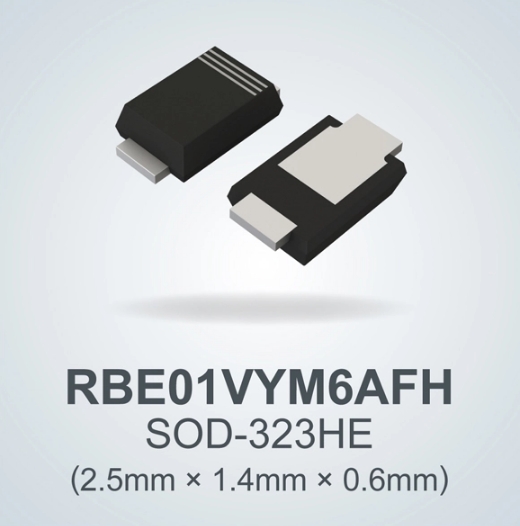
  ROHM has developed an innovative Schottky barrier diode that overcomes the traditional VF / IR trade-off. This way, it delivers high reliability protection for a wide range of high-resolution image sensor applications, including ADAS cameras.  Modern ADAS cameras and similar systems require higher pixel counts to meet the demand for greater precision. This has created a growing concern – the risk of damage caused by photovoltaic voltage generated under light exposure during power OFF. While low-VF SBDs are effective countermeasures, low IR is also essential during operation to prevent thermal runaway. However, simultaneously achieving both low VF and IR has been a longstanding technical challenge. ROHM has overcome this hurdle by fundamentally redesigning the device structure – successfully developing an SBD that combines low VF with low IR which is ideal for protection applications.  The RBE01VYM6AFH represents a novel concept: leveraging the low-VF characteristics of rectification SBDs for protection purposes. By adopting a proprietary architecture, ROHM has achieved low IR that is typically difficult to realize with low VF designs. As a result, even under harsh environmental conditions, the device meets market requirements by delivering VF of less than 300mV (at IF=7.5mA even at Ta=-40°C), and an IR of less than 20mA (at VR=3V even at Ta=125°C.) These exceptional characteristics not only prevent circuit damage caused by high photovoltaic voltage generated when powered OFF, but also significantly reduce the risk of thermal runaway and malfunction during operation.  The diode is housed in a compact flat-lead SOD-323HE package (2.5mm × 1.4mm / 0.098inch × 0.055inch) that offers both space efficiency and excellent mountability. This enables support for space-constrained applications such as automotive cameras, industrial equipment, and security systems. The RBE01VYM6AFH is also AEC-Q101 qualified, ensuring suitability as a protection device for next-generation automotive electronics requiring high reliability and long-term stability.  Going forward, ROHM will focus on expanding its lineup with even smaller packages to address continuing miniaturization demands.  Key Specifications  Application Examples  Image sensor-equipped sets such as ADAS cameras, smart intercoms, security cameras, and home IoT devices.  Terminology  Photovoltaic Voltage  A term commonly used with optical sensors, referring to the voltage produced when exposed to light. In general, the stronger the light intensity or higher the pixel count the greater voltage generated.
Key word:
Release time:2025-10-27 16:49 reading:808 Continue reading>>
ROHM Develops an Ultra-Compact MOSFET Featuring Industry-Leading* Low ON-Resistance Ideal for Fast Charging Applications
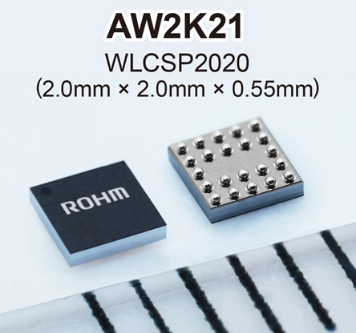
  ROHM has developed a 30V N-channel MOSFET — AW2K21 — in a common-source configuration that achieves an industry-leading ON-resistance of 2.0mΩ (typ.) in a compact 2.0mm × 2.0mm package.  With the rise of compact devices featuring large-capacity batteries, such as smartphones, the need for fast charging functionality to shorten charging times continues to grow. These applications require bidirectional protection to prevent reverse current flow to peripheral ICs and other components when not actively supplying or receiving power. What’s more, fast charging involves high current power transfer, leading smartphone manufacturers to demand stringent specifications for MOSFETs, including a maximum current rating of 20A, breakdown voltage between 28V and 30V, and an ON-resistance of 5mΩ or less. However, meeting these requirements with standard solutions typically necessitates the use of two large low ON-resistance MOSFETs, increasing board space along with mounting complexity.  In response, ROHM developed an ultra-compact low ON-resistance MOSFET optimized for fast high-power charging. The AW2K21 adopts a proprietary structure that enhances cell density while minimizing the ON-resistance per unit chip area. Two MOSFETs are integrated into a single package, allowing a single part to support bidirectional protection applications (commonly required in power supply and charging circuits).  The proprietary structure also places the drain terminal on the top surface, unlike on the backside in standard vertical trench MOS structures. This enables the use of a WLCSP, which achieves a larger chip-to-package area ratio that further reduces ON-resistance per unit area. As a result, the new product not only minimizes power loss but also supports high current operation, making it ideal for high-power fast charging applications despite its ultra-compact size.  For example, in power supply and charging circuits for compact devices, standard solutions typically require two 3.3mm × 3.3mm MOSFETs. In contrast, the AW2K21 can achieve the same functionality with a single 2.0mm × 2.0mm unit, reducing the footprint and ON-resistance by approximately 81% and 33%, respectively. Even compared to similarly sized GaN HEMTs, ON-resistance is decreased by up to 50%, contributing to lower power consumption and increased space savings across a variety of applications.  The AW2K21 is also suitable for use as a unidirectional protection MOSFET in load switch applications, where it maintains the industry’s lowest ON-resistance. At the same time, ROHM is further pushing the limits of miniaturization with the development of an even smaller 1.2mm × 1.2mm model.  Going forward, ROHM remains dedicated to supporting the miniaturization and energy efficiency of electronic systems through compact, high-performance solutions that contribute to the realization of a sustainable society.  Key Product Characteristics  Application Examples  • Smartphones  • VR (Virtual Reality) headsets  • Compact printers  • Tablets     • Wearables           • LCD monitors  • Laptops     • Portable gaming consoles    • Drones  And other applications equipped with fast charging capability.  Terminology  MOSFET (Metal Oxide Semiconductor Field Effect Transistor)  A field-effect transistor (FET) featuring a metal oxide semiconductor structure (the most commonly used type). It consists of three terminals: gate, drain, and source. Applying a voltage to the gate (control terminal) regulates current flow from the drain to the source.  N-channel MOSFETs turn ON when a positive voltage is applied to the gate relative to the source. A common-source configuration MOSFET integrates two transistor elements that share a single source terminal.  ON-Resistance  The resistance between the Drain and Source of a MOSFET when it is in the ON state. A smaller RDS(on) reduces power loss during operation.  Breakdown Voltage  The maximum voltage that can be applied between the drain and source terminals of a MOSFET without causing damage. Exceeding this limit results in dielectric breakdown, potentially leading to device failure or malfunction.  WLCSP (Wafer Level Chip Scale Package)  An ultra-compact package in which terminals and wiring are formed directly on the wafer before separated into individual chips. Unlike general packages where the chips are cut from the wafer and then molded with resin to form terminals, WLCSP allows the package size to match the chip itself, making it possible to further reduce size.  GaN HEMT  GaN (Gallium Nitride) is a compound semiconductor material used in next-generation power devices. It offers superior physical properties over conventional silicon, enabling higher frequency operation with faster switching speeds. HEMT stands for High Electron Mobility Transistor.
Key word:
Release time:2025-07-08 17:04 reading:925 Continue reading>>
New High Accuracy Current Sense Amps Compatible with Both Negative and High Voltages
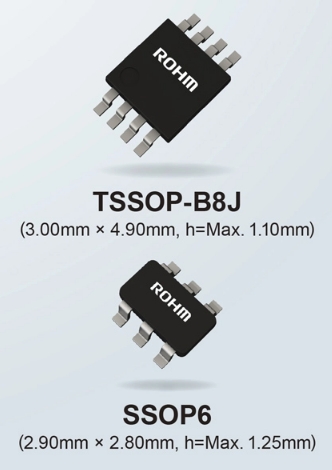
  ROHM has developed a new lineup of high accuracy current sense amps – the BD1423xFVJ-C and the BD1422xG-C. They are qualified under the AEC-Q100 automotive reliability standard. The BD1423xFVJ-C series, offered in the TSSOP-B8J package, supports input voltages up to +80V, making it ideal for high-voltage environments such as 48V DC-DC converters, redundant power supplies, auxiliary batteries, and electric compressors. The series includes three models with different gain settings: BD14230FVJ-C, BD14231FVJ-C and BD14232FVJ-C.  For lower voltage use cases, the BD1422xG-C, available in the compact SSOP6 package, supports input voltages up to +40V. This makes them suitable for automotive applications requiring space-saving designs, such as current monitoring and protection (overcurrent) in 5V/12V power supply networks used in body and drivetrain domains. Like its high-voltage counterpart, this series also consists of three different gain options: BD14220G-C, BD14221G-C and BD14222G-C.  In recent years, alongside conventional 5V/12V power supplies, the automotive market has seen a growing adoption of 48V systems fueled by the rising popularity of electric vehicles. Furthermore, as vehicle functionality becomes more advanced, the need for precise monitoring and control across a wide range of applications continues to increase, placing a greater importance on high-accuracy current sensing.  A current sense amp indirectly measures the current flowing through a circuit by amplifying the miniscule voltage drop across a shunt resistor. The amplified signal is then sent to an ADC or comparator for system control and monitoring. ROHM’s automotive-grade current sense amps meet market demands by leveraging proven analog expertise. This enables high-accuracy current sensing with compatibility for both negative and high voltage environments, contributing to improved safety and reliability in automotive applications, particularly electric vehicles.  These new products achieve greater space efficiency by integrating most of current sensing circuitry, typically comprised of an operational amplifier and discrete components, int o a single package. As a result, current detection is possible by simply connecting a shunt resistor. The devices also feature a two-stage amplifier configuration, consisting of a chopper amplifier at the input and an auto-zero amplifier at the output. Internal resistor matching for gain setting ensures stable, accurate current sensing (±1%) while minimizing the effects of temperature variations.  Furthermore, current detection accuracy is maintained even when an external RC filter circuit added for noise suppression, significantly reducing design complexity and development time. Additional features include -14V negative voltage tolerance that supports back electromotive force, reverse connection, and negative voltage input.  Going forward, ROHM will continue to deliver optimal solutions that contribute to higher precision and enhanced reliability in automotive equipment.  Application Examples  • BD1423xFVJ-C (for 48V systems): Redundant power supplies, auxiliary batteries, DC-DC converters, and electric compressors, and the like  • BD1422xG-C (for 5V/12V systems): Body DCUs (Domain Control Units) / ECUs (Electronic Control Units), etc.  Terminology  AEC-Q100 Automotive Reliability Standard  AEC stands for Automotive Electronics Council, a reliability standard for automotive electronic components established by major automotive manufacturers and US electronic component makers. Q100 is a standard that specifically applies to integrated circuits (ICs).  Shunt Resistor  A resistor connected in series in the current path to detect the current in the circuit by measuring the potential difference across it.  Chopper Amp  An amp circuit designed to minimize signal offset and noise, primarily used for accurately amplifying low-frequency and weak DC signals.  Auto-Zero Amp  An amp that automatically compensates for offset voltage (unwanted noise and errors) by continuously sampling and correcting it during operation. This ensures high signal accuracy, making it ideal for applications that demand ultra-precise measurement and signal processing.
Key word:
Release time:2025-06-13 16:56 reading:834 Continue reading>>
ROHM Develops Compact Surface-Mount Near-Infrared LEDs Featuring Industry-Leading* Radiant Intensity
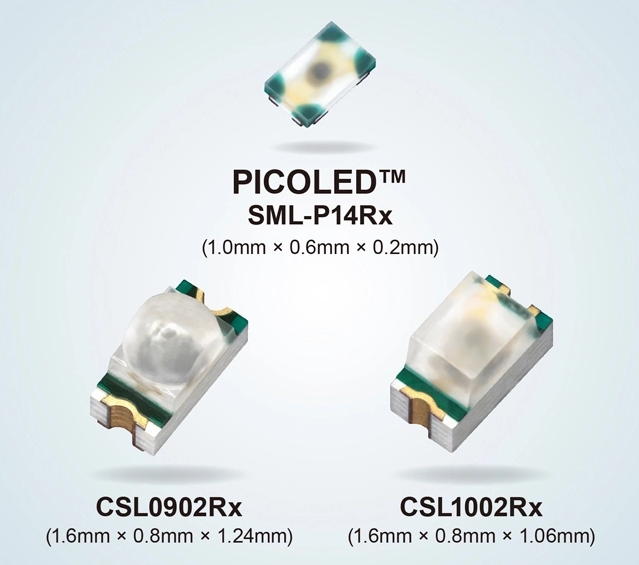
  ROHM has expanded its portfolio of surface-mount near-infrared (NIR) LEDs with new compact top-view types. They are optimized for applications such as VR/AR devices, industrial optical sensors, and human detection sensors.  The demand for advanced sensing technologies utilizing near-infrared (NIR) has grown in recent years, particularly in VR/AR equipment and biosensing devices. These technologies are used in applications such as eye tracking, iris recognition, and blood flow/oxygen saturation measurements that require high accuracy. At the same time, miniaturization, energy efficiency, and design flexibility are becoming increasingly important. In industrial equipment, near-infrared LEDs are playing a greater role with the rise of precise printer control and automation systems. In response, ROHM is expanding customer options by developing a lineup of compact packages and wavelengths that offer greater design flexibility, while contributing to higher precision and power savings by achieving high radiant intensity.  The new lineup consists of six models in three package configurations, including two ultra-compact (1.0mm × 0.6mm), ultra-thin (t=0.2mm) products as part of the PICOLED™ series: SML-P14RW and SML-P14R3W. In addition, there are four variants in the industry-standard (1.6mm × 0.8mm) size, featuring a narrow beam circular lens package (CSL0902RT, CSL0902R3T) and flat lens design that emits light over a wide range (CSL1002RT, CSL1002R3T). Each package is available in two wavelengths, 850nm (860nm for the SML-P14RW) and 940nm, allowing customers various options for their specific application needs. The 850nm wavelength is ideal for phototransistors and camera sensors, making it suitable for high-sensitivity applications such as eye tracking and object detection in VR/AR. At the same time, the 940nm wavelength is less affected by sunlight and does not appear red when emitting light, making it suitable for motion sensors. It is also widely used in biosensing applications such as pulse oximeters to measure blood flow and oxygen saturation (SpO2).  The light source incorporates an NIR element with an optimized emission layer structure utilizing proprietary technology developed through in-house manufacturing expertise. This has made it possible to achieve industry-leading* radiant intensity in a compact package, which was previously considered difficult. For example, compared to a standard 1006 size product, the SML-P14RW delivers approx. 1.4 times the radiant intensity at the same current. In other words, the SML-P14RW consumes 30% less power to achieve the same radiation intensity. This technology improves sensing accuracy and power savings for the entire system.  Going forward, ROHM will continue to provide innovative light source solutions that support next-generation sensing technologies, creating new value in the VR/AR and industrial equipment markets, while contributing to the realization of a sustainable society.  Compact NIR LED Lineup  *1:Ta=25°C *2:IF=30mA *3:IF=20mA  ROHM also offers NIR-sensitive phototransistors.  Application Examples  • VR/AR licenses (eye tracking, gesture recognition)  • Pulse oximeters (blood flow/oxygen saturation measurement)  • Industrial optical sensors (object passage detection, position detection), self-checkout systems (bill/card detection), mobile printers (paper detection)  • Home appliance remote controls (IR data communication), robot vacuum cleaners (floor detection)  Terminology  VR/AR (Virtual Reality/Augmented Reality)  Virtual reality immerses users in a completely digital environment through small high-resolution monitors or screens within an enclosed space. Augmented reality enhances the real world by overlaying digital content onto a headset or smart glasses, enabling users to interact with 3D images. Collectively, these technologies are sometimes referred to as XR (Cross Reality or Extended Reality).  Near-Infrared (NIR)  Refers to light in the wavelength range of 780nm to 1000nm. Primarily used in sensors, communication and measurement applications, it is suitable for high accuracy distance measurement and recognition.  PICOLED™ Series  ROHM's ultra-small, ultra-thin chip LEDs designed for compact mobile devices and wearables, developed using a proprietary element manufacturing process.  Radiant Intensity  An index representing the strength of energy emitted by a light-emitting device in a specific direction (unit: W/sr). This is an important factor that affects the LED’s output intensity and detection performance on the receiving side.  Note: DigiKey™, Mouser™ and Farnell™ are trademarks or registered trademarks of their respective companies.  *PICOLED™ is a trademark or registered trademark of ROHM Co., Ltd.
Key word:
Release time:2025-05-26 14:54 reading:891 Continue reading>>

Turn to

/ 17

  • Week of hot material
  • Material in short supply seckilling
model brand Quote
TL431ACLPR Texas Instruments
RB751G-40T2R ROHM Semiconductor
CDZVT2R20B ROHM Semiconductor
BD71847AMWV-E2 ROHM Semiconductor
MC33074DR2G onsemi
model brand To snap up
BP3621 ROHM Semiconductor
IPZ40N04S5L4R8ATMA1 Infineon Technologies
BU33JA2MNVX-CTL ROHM Semiconductor
ESR03EZPJ151 ROHM Semiconductor
TPS63050YFFR Texas Instruments
STM32F429IGT6 STMicroelectronics
Hot labels
ROHM
IC
Averlogic
Intel
Samsung
IoT
AI
Sensor
Chip

About us

Qr code of ameya360 official account

Identify TWO-DIMENSIONAL code, you can pay attention to

AMEYA360 mall (www.ameya360.com) was launched in 2011. Now there are more than 3,500 high-quality suppliers, including 6 million product model data, and more than 1 million component stocks for purchase. Products cover MCU+ memory + power chip +IGBT+MOS tube + op amp + RF Bluetooth + sensor + resistor capacitance inductor + connector and other fields. main business of platform covers spot sales of electronic components, BOM distribution and product supporting materials, providing one-stop purchasing and sales services for our customers.

Please enter the verification code in the image below:

verification code